


How to choose your Home Trainer?

During the winter season, due to harsh weather conditions, many cyclists opt for indoor training using a home trainer. This device, the principle of which is simple (you place your bike on the unit, which then reproduces outdoor pedalling with resistance in a more or less realistic way), has improved enormously. Today, some models are truly packed with technology, offering sensations very close to those of a ride in real conditions.
If you are tempted by this option but do not know which model to choose, here are a few points to help you see things more clearly.
Standards
- Types of trainers: frame home trainers, rollers and Indoor Bikes
- Types of resistance: air, mechanical, fluid, magnetic / electromagnetic
- Types of training: interactive and connected
Home trainer or rollers?
Two types of home trainers are offered by manufacturers: rollers and frame home trainers. The main difference between these two systems is that on rollers the bike is not fixed, whereas on the home trainer it is.
Rollers are compact and quick to use. Even though you need to learn to maintain your balance to use them, it is the most practical system as you simply have to get on with your bike, without having to remove or fit any components. However, it does have a few weak points: even if some high-end models allow you to choose the resistance level before starting, it is impossible to change it during the session without having to get off the bike. Furthermore, at high intensity, it can be difficult to maintain balance and therefore stay on the rollers.
In addition to great stability, the main advantage of the home trainer is that it offers the possibility of choosing from different levels of pedalling resistance, allowing you to adjust it remotely by operating a lever connected to its roller via a cable. This system is less quick to set up but allows for very specific training sessions.
Rollers
As mentioned previously, this system is the simplest to set up as it requires no assembly with the bike, which stays in place solely thanks to the gyroscopic effect of the wheels. Therefore, a good level of balance and flexibility is essential to feel comfortable and pedal naturally.
The roller home trainer is perfectly suited for warming up or short sessions as a complement to training, to improve balance and cadence. However, the adjustment options are fairly limited.
Since the bike is not fixed, it is impossible to simulate a gradient and the number of resistance levels is limited.
Some models feature a system that can reduce vibrations and absorb shocks generated by pedalling.
If you opt for a roller, you will need to take the material into account:
- Plastic: It provides little grip and wears the tyre out quickly
- Metal: Being rougher than plastic, it provides better grip
- Gel: It provides good grip and wears the tyre much less
Frame home trainers
Air
These models are fitted with a propeller that provides air resistance. They can therefore only reproduce very low-gradient slopes and are among the noisiest.
Mechanical
These basic models are suitable for warming up or simplified use. They are among the lightest (as there is no complex equipment) and fold up for transport without taking up too much space.
They have no resistance adjustment positions and are only fitted with a knob that generates constant pressure between the tyre and the home trainer roller. You will need to use different gear combinations between chainrings and cassette to vary the effort.
Fluid
It is the quietest model on the market. It offers pedalling resistance very close to real-world conditions. The large flywheel is immersed in oil and allows steep gradients to be simulated.
The higher the gear and the greater the speed, the more resistance it will provide.
Magnetic / Electromagnetic
These widely used models are the best solution for getting started with indoor cycling as they offer more resistance and make less noise than air models.
These types of home trainers use the magnetic force between a magnet system and a metal flywheel. The heavier the flywheel, the more realistic the pedalling sensation. This technology offers a very wide range of adjustments and can provide very high levels of resistance.
This technology is the most widespread (from entry-level to top-of-the-range) as it is very easy to use and very robust. Entry-level models feature a knob adjustment via a tension cable, while the higher-end models have a connectivity system allowing electronic management of resistance (referred to as electromagnetic resistance).
These models often offer a very attractive price-to-performance ratio. Prices vary depending on the maximum power output, the resistance levels on offer, and the accessories included.
Depending on the type of installation, one can distinguish:
The most common system is the one that mounts on the rear wheel only: it requires a little more time to install but is more stable in use. It is advisable to use a home trainer tyre, which will be more suitable and more durable than a standard road tyre. The first magnetic brake models are relatively simple, but you will find some with an electromagnetic system that offers a multitude of training assistance features, going as far as reproducing a real-world ride with a visual display.
The top-of-the-range system fully replaces your rear wheel to drive a cassette directly:
Cyclists looking to pedal with precision and at a certain power output will opt for these models, as resistance is transmitted directly through the chain, eliminating power loss. These models offer a wide range of adjustment and training assistance options, just like the rear wheel system.
INDOOR BIKES
They are redefining the use of the home trainer and fitness cycling in gyms. Indoor Bikes allow you to ride at home without using your own bike while keeping the same settings and positions. Your bike stays in the garage, sparing it from general wear and the assembly/disassembly that can damage components.
These products provide a realistic riding sensation with great precision and responsiveness, while remaining quiet. It is even possible to add your own components such as handlebars, pedals or a saddle to maintain your reference points.
These home trainers can be connected to virtual platforms for total immersion in your training or a race. ANT+ and Bluetooth connectivity are also available to integrate data from external devices such as a smartphone or sensors. Some models, such as the Wahoo Kickr Bike, offer a unique experience with real-time physical gradient changes and gear ratio programming identical to your own bike. The brand Stages also offers its Cycling Smart Bike model, which has the advantage of precise pedalling power measurement.
Connected home trainers? Yes!
Pedalling in your living room or garage can be quite tedious, we admit. That is precisely why connected home trainers have arrived on the market.
Participation and organisation of online races, virtual opponents or real-time confrontations with other cyclists, sharing and creating personalised routes, visualising journeys in 2D or with Google Maps… Numerous features that will help you extend and enrich your training sessions, while making them more enjoyable and engaging.
In these interactive and virtual models, the software automatically adjusts the resistance and braking system according to the characteristics of the chosen route. And, for added realism, these models can be fitted with a directional front wheel support so that you can manage your trajectory.
It should be noted, however, that the apps offered by these interactive home trainers are not always free. Generally, basic features are included as standard, and a licence must be purchased to access all the other features available within the network.
Which home trainer should you choose?
To choose the home trainer best suited to your use, it is therefore necessary to take into account:
- Compatibility with your bike
- Stability: the number of contact points on the ground for balance
- The attachment system: none (rollers), rear wheel, frame
- Maximum power
- The type of resistance: air, mechanical, fluid, magnetic/electromagnetic
- The number of resistance levels
- The resistance control: knob, handlebar lever, smartphone/tablet
- Interactivity: none, yes (included), yes (but optional)
Make your choice based on how you plan to use it and your budget. Entry-level models will be useful for those who simply want to stay fit in winter. For demanding cyclists looking for an effective training tool to improve performance, a model capable of reaching high pedalling resistance levels and paired with an app to track performance is a better choice.
How to train on a bike in winter with a home trainer?
Once you have your home trainer to hand, you may be wondering how to train effectively on it. Don't worry, our experts share their tips:
1. Stay hydrated during exercise and use a towel and a frame protection mat to avoid dirtying the floor and your bike. As you might expect, you will sweat a great deal on the home trainer.
2. Limit the duration of your session on the home trainer. Indeed, pedalling indoors in a fixed location provides very little ventilation for your body and causes heavy perspiration. You lose a lot of water in a short time, as well as minerals. This can cause a fluid deficit in your body.
3. Vary your exercises to add a fun element and work on specific areas. You can work on strength and cadence by varying the duration and intensity of the exercise. You can also improve your explosive power by incorporating short, intense efforts followed by recovery periods into your session.
ROAD - Turbo Trainers and Rollers
-


Home Trainer TACX NEO 2T SMART T2875
Regular price 7.998,00 DKKRegular priceUnit price per -

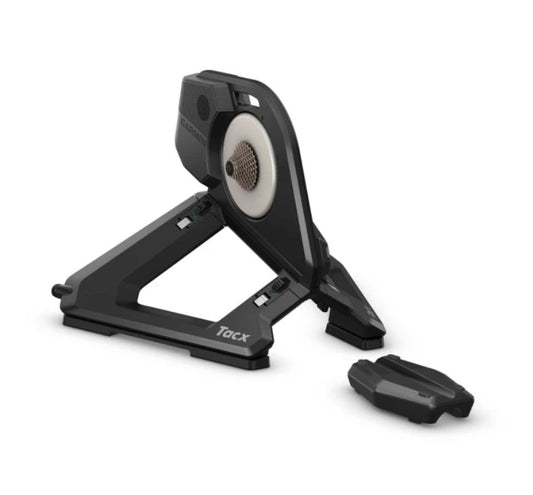
TACX NEO 3M Indoor Trainer
Regular price 15.155,00 DKKRegular priceUnit price per -
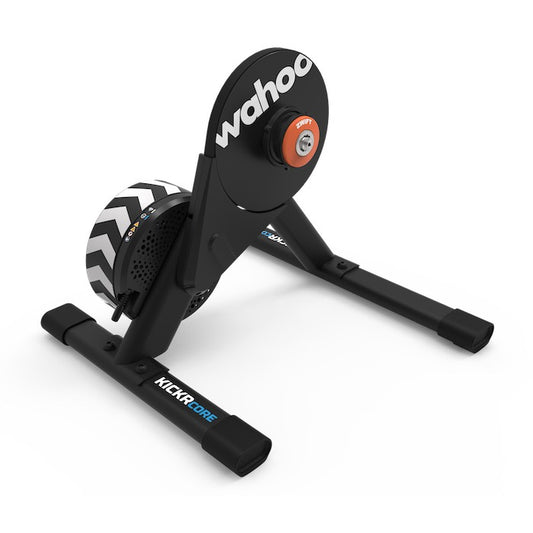
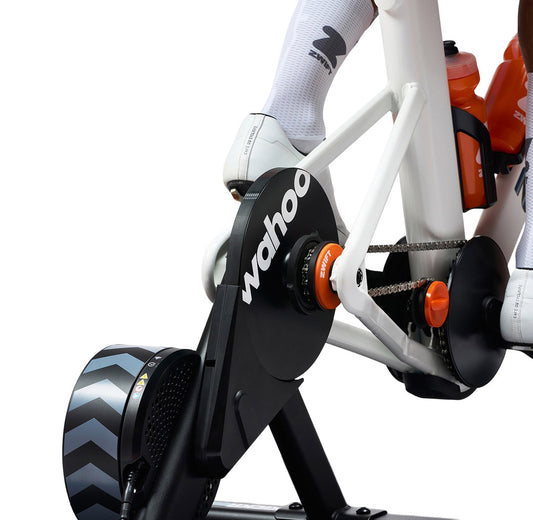
Home Trainer WAHOO KICKR CORE V2 ZWIFT ONE Version COG&CLICK
Regular price 4.630,00 DKKRegular priceUnit price per -
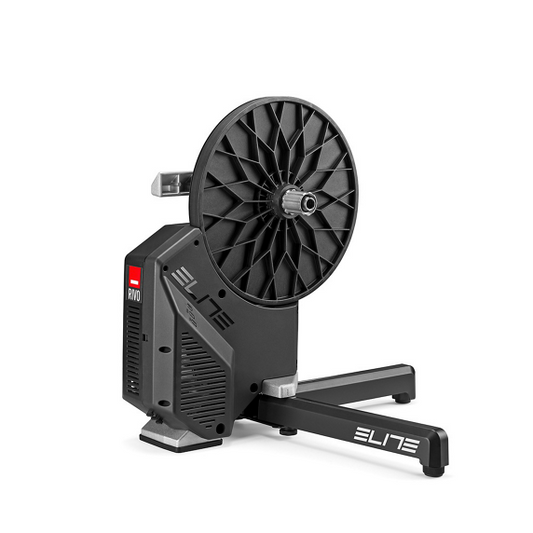
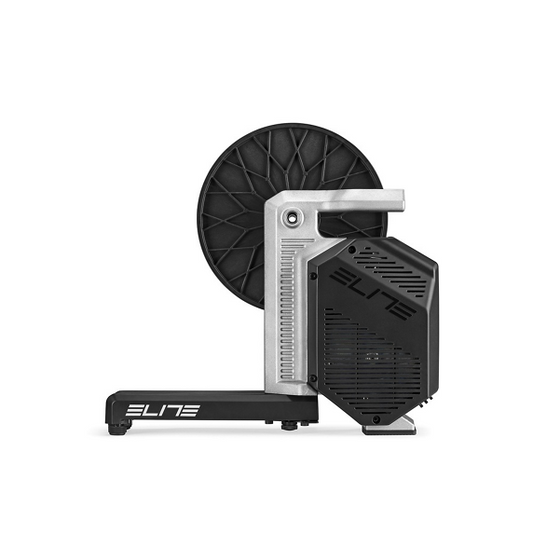
ELITE RIVO Smart Trainer
Regular price 3.788,00 DKKRegular priceUnit price per -
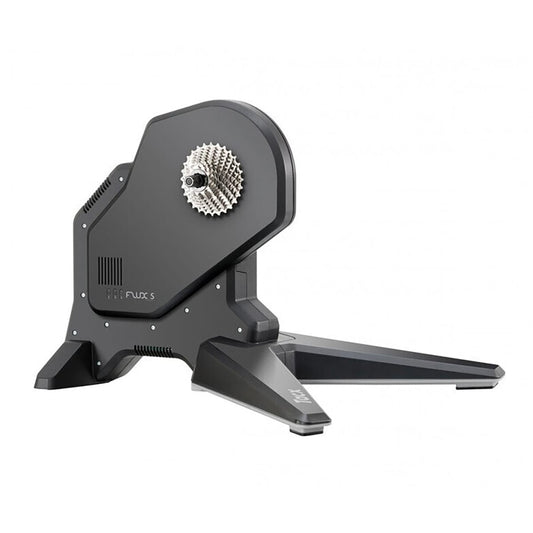

TACX FLUX S SMART T2900S Home Trainer
Regular price 4.209,00 DKKRegular priceUnit price per -
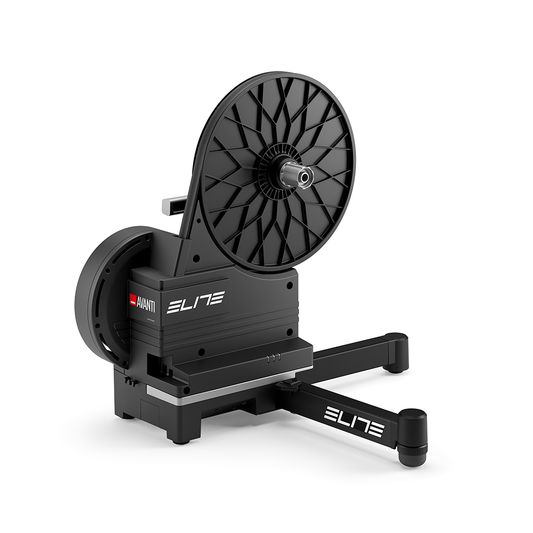
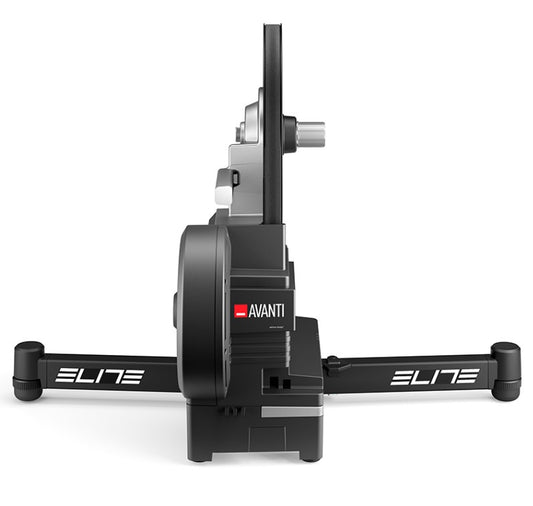
ELITE AVANTI Home Trainer
Regular price 4.462,00 DKKRegular priceUnit price per -
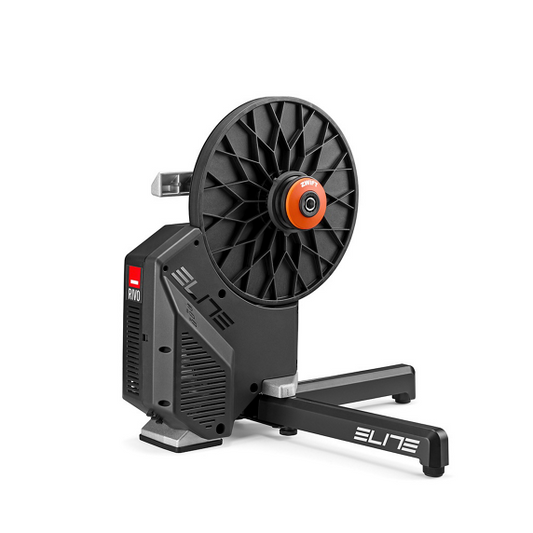
Home Trainer ELITE RIVO COG&CLICK Version
Regular price 4.041,00 DKKRegular priceUnit price per -
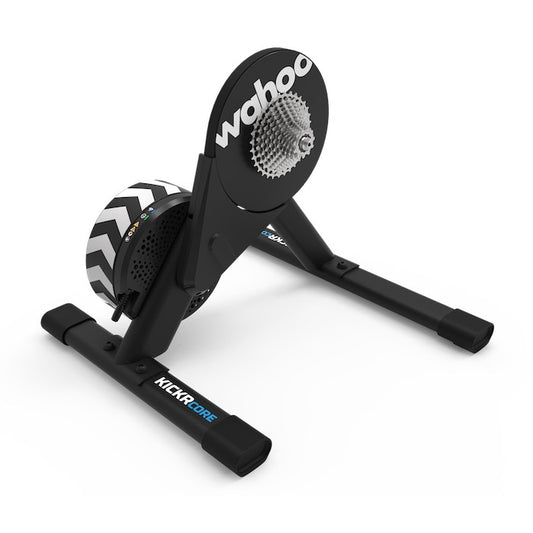
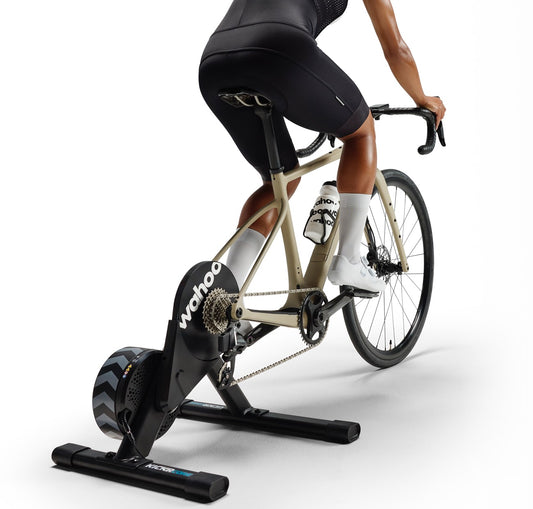
Indoor trainer WAHOO KICKR CORE V2
Regular price 4.631,00 DKKRegular priceUnit price per


